
Once you’ve settled on concrete for your patio, the next decision is the finish, and it’s a bigger decision than most homeowners realize. The finish determines how the surface looks, how it feels underfoot in July, whether it’s slick after a storm, and how much attention it wants from you over the next fifteen years.
The structural work underneath is identical across all of these options. Same base preparation, same slab thickness, same reinforcement, same control joints. What changes is what happens to the top surface while the concrete is still workable, and that window is short, which is why finish work separates experienced crews from inexperienced ones.
Here are the four we install most often across Tulsa, Broken Arrow, Owasso, Bixby, and Jenks, and what each one is actually like to live with.
Two Oklahoma-specific things to keep in mind
Before the options themselves, two factors matter more here than they would in a milder climate.
Surface temperature. Dark colors absorb heat, and an Oklahoma afternoon in July is not forgiving. A deeply pigmented patio can get genuinely uncomfortable for bare feet and for dogs. Lighter tones and mid-range grays stay noticeably cooler, and if your patio gets full afternoon sun with no shade structure, this should weigh heavily in your color choice.
Traction when wet. Our storms arrive fast and hard. Texture is what keeps a patio safe after a downpour, and the smoother and glossier the finish, the more that matters. This is also why a slick trowel finish, the kind you’d see on a garage floor, is a poor choice outdoors no matter how clean it looks.
Broom finish
The classic. After the concrete is placed and floated, the crew drags a broom across the surface to leave fine parallel ridges.
It’s the most common patio finish for good reason. The texture gives reliable traction wet or dry, standard gray reflects heat well, and it asks essentially nothing of you in maintenance. No sealing required, no color to fade, no reapplication schedule. Hose it off when it gets dusty.
Where it’s less strong is visual interest. A broom finish is a clean, functional, understated surface. If you want your patio to be a design feature rather than a foundation for one, this isn’t the option that gets you there on its own.
Worth knowing: the direction of the broom lines is a design choice. Straight lines running the length of the patio look different from an arced or fanned pattern, and it costs nothing to ask for what you want.
Exposed aggregate
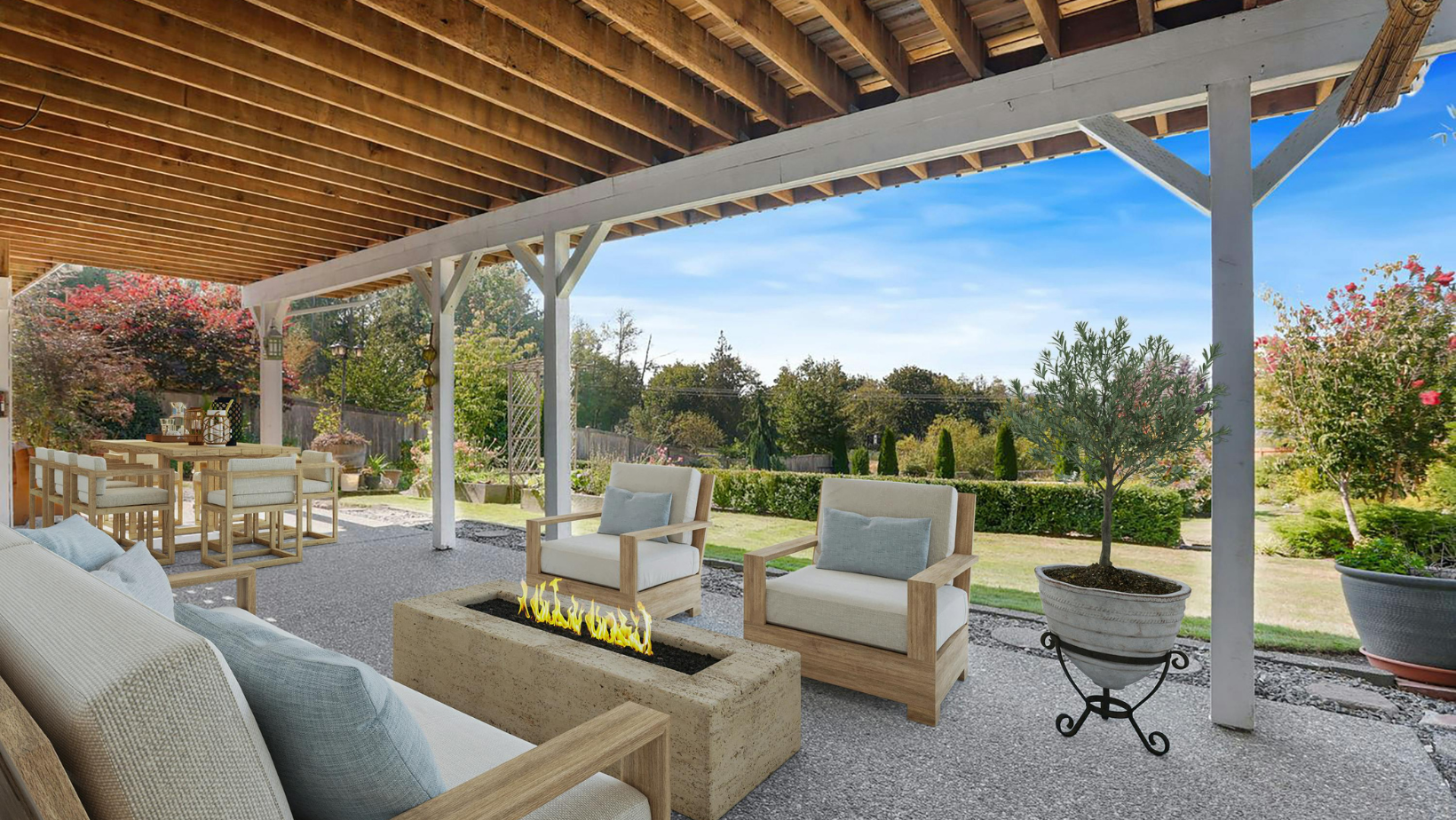
Here the surface paste is washed back before it fully sets, revealing the stone in the mix underneath. What you end up with is a pebbled surface with real dimension and natural color variation.
This is one of the most durable finishes available. There’s no color layer to fade and no pattern to wear down, because you’re looking at the actual aggregate in the concrete. It hides dirt, leaf stains, and general wear better than any other option, which makes it a strong pick for patios under trees or around pools. Traction is excellent.
The texture is the tradeoff, and it goes both ways. Some people love the natural, rugged feel. Others find it rough for bare feet or notice that patio furniture doesn’t glide the way it would on a smooth surface. If you’re sensitive to that, ask to see and stand on a sample before committing, because it’s difficult to judge from photos.
The look of the finish depends heavily on the aggregate used, so ask what stone will be in your mix.
Stained concrete
Staining adds color to a concrete surface, and there are two different approaches that often get lumped together.
Acid stain reacts chemically with the minerals in the concrete rather than sitting on top of it. The result is mottled and variegated, closer to natural stone or weathered leather, with subtle variation across the slab that no two pours share. The color penetrates, so it doesn’t chip or peel. The palette is limited to earth tones, browns, tans, rust, and soft greens.
Water-based stains offer a much wider color range and a more consistent, predictable result. They sit closer to the surface than acid stain does, which means they’re somewhat more susceptible to UV fading over years of Oklahoma sun.
Either way, stained concrete needs a sealer, and that sealer needs reapplication every few years to hold the color and protect the surface. Plan on it as a recurring afternoon of work.
Staining pairs well with a broom or light texture underneath, giving you color and traction at the same time.
Stamped concrete
Stamped concrete presses patterned mats into the surface while it’s still workable, imitating flagstone, slate, cobblestone, brick, or wood plank. Combined with integral color and a contrasting release color, the result can be genuinely convincing.
This is the most transformative option and the most demanding to install. The crew is working against the clock as the concrete sets, and pattern alignment, consistent stamp depth, and color application all have to happen right the first time. There’s no fixing a poorly stamped patio afterward. When evaluating contractors for stamped work specifically, ask to see completed jobs that are several years old rather than fresh photos.
Two practical notes for Oklahoma. First, stamped patterns hold their appearance best when sealed, and sealer wants reapplication every two to three years under our sun. Second, sealed stamped concrete can get slick when wet, so ask for an anti-slip additive in the sealer. Any good installer will suggest it before you do, but confirm it either way.
Combining finishes
You don’t have to choose just one. A common and effective approach is a stamped or stained border framing a broom-finish or exposed-aggregate field. You get a defined, finished edge and visual structure without the entire surface carrying the maintenance requirements of a fully decorative finish.
Bands, saw-cut patterns, and contrasting borders can also break up a large patio visually and let control joints do their structural job while looking intentional rather than accidental.
About sealing
Broom and exposed aggregate finishes are fine unsealed. Anything with color, meaning stained or stamped, wants a sealer to hold its appearance, and that sealer is a maintenance item rather than a one-time step.
Reapplication in Oklahoma generally lands in the two to four year range depending on sun exposure and traffic. It’s straightforward homeowner work with a roller or sprayer on a clean, dry surface. Skipping it doesn’t damage the concrete structurally, but the color will dull and the pattern will lose its depth.
See samples before you decide
Concrete finishes photograph differently than they look in person, and color in particular shifts noticeably between a screen, a small sample, and a full patio in your own light.
Tulsa Driveways installs every finish covered here on custom concrete patios throughout Tulsa and Green Country, built on the base preparation and reinforcement our clay soil demands. Keith, our owner, will walk your space with you, bring samples, and talk through which finish fits your sun exposure, your use, and the look you’re after.
Schedule a consultation and let’s find the right one for your backyard.