

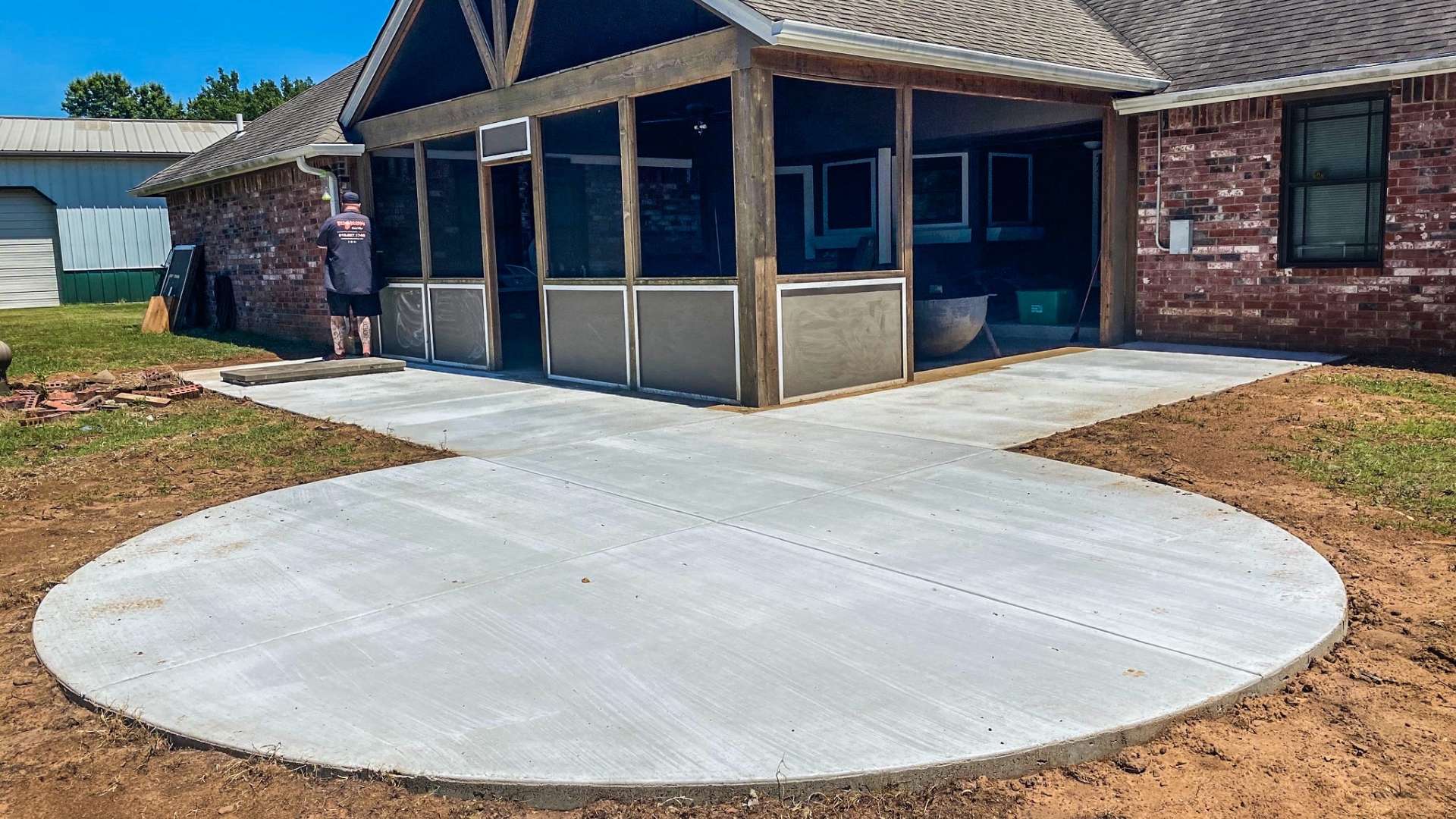
Tulsa winters aren’t long, but they’re unpredictable. We can go from a 65 degree afternoon to an overnight freeze in the same week, and a single ice storm can leave driveways coated for days. That back and forth is hard on concrete, and the best time to get ahead of it is right now, while the weather is still mild enough to do the work properly.
A little attention in September and October goes a long way toward keeping your driveway looking good and performing well through spring. Here’s what we recommend homeowners focus on before the temperatures drop.
Start With a Thorough Cleaning
Before you do anything else, give your driveway a good cleaning. Summer leaves behind more than you might think: oil drips, tire marks, fertilizer runoff, and dirt packed into the joints. Once leaves start falling, they add their own problem. Wet leaves left sitting on concrete can stain the surface and hold moisture against it for weeks.
A pressure washer or a stiff bristle brush with a concrete cleaner will handle most of it. Pay attention to oil spots, since they can keep sealer from bonding. Keep sweeping or blowing leaves off the driveway through the fall so they don’t pile up in corners and along the edges.
Look Closely at Cracks and Joints
With the surface clean, walk the driveway and look for small cracks, gaps along control joints, and spots where the concrete meets your garage slab or sidewalk. Hairline cracks are common and usually cosmetic, but any opening that lets water in becomes a bigger concern once freezing temperatures arrive. Water that gets into a crack and freezes expands, and repeated cycles can widen the gap over the course of a single winter.
Filling small cracks with a flexible concrete crack sealant before cold weather sets in keeps water out. Most products need temperatures above 40 or 50 degrees to cure, so this is a job for early to mid fall. If you notice larger cracks, sections that have shifted or sunk, or edges that are breaking away, it’s worth having a professional take a look before winter rather than after.
Seal the Surface While It’s Still Warm Enough
Sealing is one of the most effective things you can do to protect concrete heading into winter. A quality penetrating or film-forming sealer reduces how much water the surface absorbs, and that matters because moisture inside the concrete is what causes damage during freeze and thaw cycles. Sealer also helps the surface resist deicing chemicals and staining.
Timing is the key here. Most sealers need air and surface temperatures of at least 50 degrees for application and for the following 24 hours. In Tulsa, that usually means you have a comfortable window through October, and sometimes into early November. Pick a dry stretch with no rain in the forecast, make sure the concrete is completely dry, and follow the manufacturer’s directions for coverage. If your driveway was sealed within the last two or three years, check whether water still beads on the surface. If it soaks in instead, it’s time for a new coat.
Check Your Drainage
Standing water is one of concrete’s biggest enemies in winter. Take a look at where water goes when it rains. Do your downspouts empty onto the driveway? Are there low spots where puddles sit for hours? Does water run off the lawn and across the concrete?
Simple fixes like adding downspout extensions, clearing gutters of leaves, and making sure soil along the edges slopes away from the slab can make a real difference. Water that drains off quickly doesn’t have the chance to soak in and freeze, and it won’t turn into a sheet of ice across your driveway either.
Plan Ahead for Ice and Snow
It’s easier to make good choices about ice before you’re standing in the driveway on a frozen morning. A few things to keep in mind:
Be careful with deicers. Rock salt is cheap and easy to find, but it can cause surface scaling and flaking, especially on newer concrete. Products containing ammonium nitrate or ammonium sulfate are even harder on concrete and should be avoided entirely. Calcium magnesium acetate is a gentler option, and plain sand gives you traction without any chemical effect.
If your driveway was poured within the last year, skip deicers altogether this winter. New concrete is still gaining strength and is more vulnerable to chemical damage. Sand or non-clumping kitty litter will do the job for traction.
Use a plastic shovel or one with a rubber edge. Metal blades can chip the surface and catch on joints. If you use a snow blower, set the skids so the auger doesn’t scrape directly against the concrete.
Thinking About New Concrete? Don’t Wait Too Long
If you’ve been planning a new driveway, patio, or replacement section, fall is a great time to get it on the schedule, but earlier is better. Concrete cures best in moderate temperatures, and early to mid fall in Oklahoma often gives us ideal conditions: warm days, cooler nights, and lower humidity than summer.
Once overnight lows start dropping below 40 degrees, pouring gets more complicated. Fresh concrete that freezes in its first few days can lose a significant amount of its strength permanently. Experienced contractors can pour in cold weather using insulated blankets, adjusted mix designs, and careful timing, but the process takes more planning. Scheduling your project in September or October gives the concrete a better start and gives you a finished driveway before the holidays.
A Quick Fall Checklist
If you want the short version, here’s what to get done before winter: clean the surface and remove oil stains, fill small cracks and open joints, apply sealer while temperatures are above 50 degrees, fix drainage problems and clear gutters, pick up a concrete-safe deicer or sand, and swap your metal shovel for a plastic one.
Let Tulsa Driveways Help You Get Ready
Whether your driveway needs a closer look before winter, a repair on a section that’s been bothering you, or a brand new pour while the weather is still on our side, Tulsa Driveways is here to help. We know how Oklahoma weather treats concrete, and we’re happy to walk your property and give you an honest assessment of what it needs.
Contact us today to schedule a consultation with us.